Cyngor Llyfrau Cymru
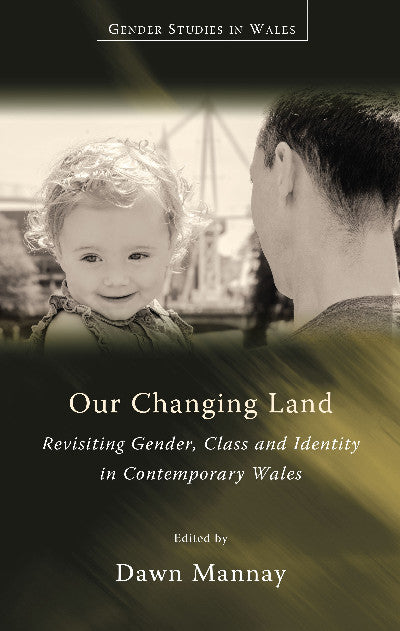
Our Changing Land - Revisiting Gender, Class and Identity in Contemporary Wales — Revisiting Gender, Class and Identity in Contemporary Wales
Our Changing Land - Revisiting Gender, Class and Identity in Contemporary Wales — Revisiting Gender, Class and Identity in Contemporary Wales
Couldn't load pickup availability
Disgrifiad Cymraeg / Welsh Description
Cyfrol o draethodau gan awduron amrywiol sy'n myfyrio ar newidiadau mewn perthynas â materion rhywedd, dosbarth, tlodi, gwleidyddiaeth, yr amgylchedd, y cyfryngau a'r iaith Gymraeg yng Nghymru yn dilyn datganoli grym, ac sy'n ystyried dyfodol y genedl.
Disgrifiad Saesneg / English Description
Our Changing Land reflects on changes in relation to issues of gender, class, poverty, politics, the environment, the media and the Welsh language in post-devolution Wales, and considers the future of the nation.
Manylion y cynnyrch / Product details
- ISBN 13
- 9781783168842
- Gwales Code
- gwales.com.9781783168842
- Gwerthwr / Vendor
- Cyngor Llyfrau Cymru
- Long Title
- Our Changing Land - Revisiting Gender, Class and Identity in Contemporary Wales — Revisiting Gender, Class and Identity in Contemporary Wales
- Sub Title
- Revisiting Gender, Class and Identity in Contemporary Wales
- Awdur / Author
- Press, Gwasg Prifysgol Cymru / University of Wales
- Current Price ex VAT
- £14.99
- Current Price inc VAT
- £14.99
- Availability Status (EN)
- Available
- Availability Status (CY)
- Ar gael
- Dyddiad cyhoeddi / Publication Date
- 2016-05-20
- Cyhoeddwr / Publisher
- Gwasg Prifysgol Cymru / University of Wales Press
- Editor
- Mannay, Dawn
- Media Type (EN)
- Paperback / softback
- Media Type (CY)
- Clawr meddal
- Pages
- 352 pages
- Size
- 138 × 216 mm
- Language Code
- English
- Categori / Category
- CY: Hanes, Hanes Lleol, Arferion Gwlad, Llên Gwerin (yn Saesneg) | EN: History, Welsh Life and Customs, Local History, Folk Tales (in English)
- Is-gategori / Subcategory
- CY: 20fed Ganrif (yn Saesneg) | EN: 20th Century (in English)
Cynnwys / Table of Contents
1. Introduction – Dawn Mannay SECTION ONE - Wales, Welshness, Language and Identity 2. Devolved Voices: Welsh Women’s Writing post 1999 – Jane Aaron 3 Only inside the classroom? Young people’s use of the Welsh language in the school, community and peer group - Non Geraint 4. Who should do the dishes now? Revisiting Gender and Housework in Contemporary Urban South Wales - Dawn Mannay SECTION TWO – Education, Labour Markets and Gender in Wales 5. ‘Placing young men’: The performance of young working-class masculinities in the S1outh Wales Valleys - Michael R.M Ward 6. Re-Educating Rhian: Experiences of Working-class Mature Student Mothers - Melanie Morgan 7. Private lives used for public work: Women Further Education teachers in Wales - Jane Salisbury 8. From low-wage manufacturing industries to the low-wage service sector: the changing nature of women's employment in Wales - Caroline Lloyd 9. Changes and continuities: Women in paid work in Wales 1994-2014 - Alison Parken SECTION THREE – Welsh Public Life, Social Policy, Class and Inequality 10. Class, Poverty and Politics in Devolved Wales - Dave Adamson 11. Women and Policy-Making: Devolution, Civil Society and Political Representation - Paul Chaney 12. The transformation of the media in Wales: technology and democracy - Hugh Mackay 13. Wind Energy: Revisiting the Debate in Wales - Karen Parkhill and Richard Cowell 14. Conclusion - Dawn Mannay
Bywgraffiad yr Awdur / Author Biography
Dawn Mannay is Lecturer in Social Sciences at Cardiff University, Wales. She employs creative methods in her work with diverse communities, and her research interests include gender, class and identity.
Adolygiad y Cyhoeddwr / Publisher Review
The last two decades have seen big changes within a small nation; the distinctiveness of Wales, in terms of its political life and culture, has grown considerably in that time. This edited collection by a range of eminent Welsh writers, emerging academics and creative artists examines what is distinctive about Wales and Welshness in an interdisciplinary yet comprehensive manner. The core concepts of gender, class and identity are explored throughout the book, which presents twelve chapters in three distinct yet overlapping thematic sections: Wales, Welshness, Language and Identity, Education; Labour Markets and Gender in Wales; and Welsh Public Life, Social Policy, Class and Inequality. The chapters explore the role of men and women in Wales and of Wales itself as a nation, an economy, and a centre of partially devolved governance, raising questions related to equality, policy and progression. The collection also features photographs, graphic art and poetic verse that both represent and extend the central arguments of the book.
Share