Cyngor Llyfrau Cymru
Roman Villa of Llantwit Major, The
Roman Villa of Llantwit Major, The
Couldn't load pickup availability
Disgrifiad Cymraeg / Welsh Description
I'r gogledd-ogledd-ddwyrain o dref Llanilltud Fawr, mewn cae o'r enw Caermead y gorwedd olion tŷ Rhufeinig o faint sylweddol ac o bwysigrwydd archaeolegol.
Disgrifiad Saesneg / English Description
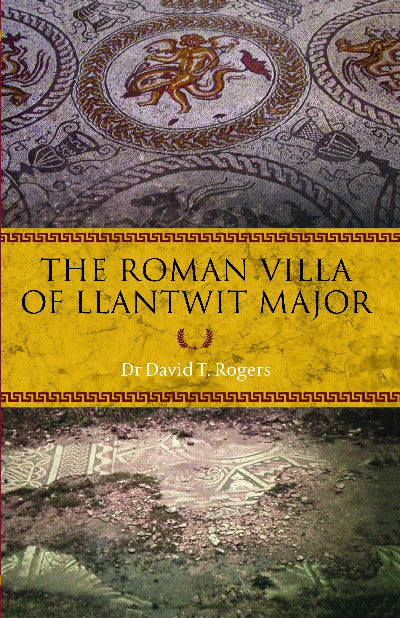
To the north-north-west of the town of Llantwit Major in a field known as Caermead, lie the remains of a Roman villa of considerable size and archaeological importance.
Dosbarthu
Byddwn yn dosbarthu eitemau sydd mewn stoc o fewn 3 diwrnod gwaith, fel arfer drwy Royal Mail Tracked 48. Ar gyfer archebion o flaen llaw, byddwn yn dosbarthu’r eitem o fewn 3 diwrnod gwaith ar ôl ei derbyn gan ein cyflenwr.
Dispatch
In-stock items will be dispatched within 3 business days, usually by Royal Mail Tracked 48. For pre-orders, we’ll dispatch within 3 business days of receiving the item from our supplier.
Manylion y cynnyrch / Product details
- ISBN 13
- 9781845243074
- Gwales Code
- gwales.com.9781845243074
- Gwerthwr / Vendor
- Cyngor Llyfrau Cymru
- Long Title
- Roman Villa of Llantwit Major, The
- Awdur / Author
- Rogers, Dr David T.
- Current Price ex VAT
- £8.75
- Current Price inc VAT
- £8.75
- Availability Status (EN)
- Available
- Availability Status (CY)
- Ar gael
- Dyddiad cyhoeddi / Publication Date
- 2020-06-11
- Cyhoeddwr / Publisher
- Llygad Gwalch Cyf
- Media Type (EN)
- Paperback / softback
- Media Type (CY)
- Clawr meddal
- Pages
- 180 pages
- Size
- 138 × 215 mm
- Language Code
- English
- Categori / Category
- CY: Hanes, Hanes Lleol, Arferion Gwlad, Llên Gwerin (yn Saesneg) | EN: History, Welsh Life and Customs, Local History, Folk Tales (in English)
- Is-gategori / Subcategory
- CY: Archaeoleg (yn Saesneg) | EN: Archaeology (in English)
Cynnwys / Table of Contents
Today, although the villa remains buried, its presence can be identified on the landscape as a series of distinct undulations and irregularities. Roman villas in Britain varied in complexity from palatial abodes such as Woodchester in Gloucester, with its grand mosaic floor and adornments, to more modest farmhouses with working outbuildings. This diversity could not only be a consequence of the wealth of the villa owner, but also due to evolution of the villa over the four hundred years of Roman rule. Many sites began as a modest Iron Age round house, and evolved into a cottage style oblong structure with a pitched roof under Roman influence.
Share