Cyngor Llyfrau Cymru
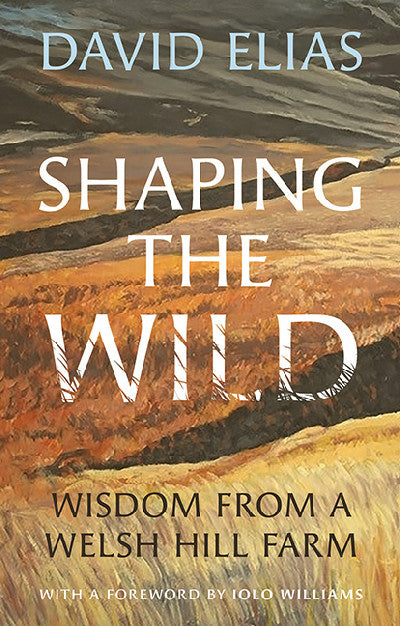
Shaping the Wild - Wisdom from a Welsh Hill Farm
Shaping the Wild - Wisdom from a Welsh Hill Farm
Couldn't load pickup availability
Disgrifiad Cymraeg / Welsh Description
Yn aml, ystyrir dulliau ffermio yn rhai niweidiol i fyd natur a'r amgylchedd, yn creu gwrthdaro rhwng y rhai sydd am warchod bywyd gwyllt a ffermwyr sy'n dibynnu ar y tir. Yn ei gyfrol gyntaf, afaelgar, mae'r cadwriaethwr David Elias yn archwilio fferm unigol yn Eryri i ddarganfod yr hyn y gellir ei ddysgu am wironedd anodd cyfuno ffermio mynydd a gofalu am fyd natur.
Disgrifiad Saesneg / English Description
Farming methods are often viewed as harmful to nature and the environment, causing friction between those wanting to protect wildlife and farmers who depend upon the land. In this captivating début, conservationist David Elias explores a singular farm in Eryri to discover what it can tell us about the gritty reality of trying to reconcile hill farming and caring for nature.
Dosbarthu
Byddwn yn dosbarthu eitemau sydd mewn stoc o fewn 3 diwrnod gwaith, fel arfer drwy Royal Mail Tracked 48. Ar gyfer archebion o flaen llaw, byddwn yn dosbarthu’r eitem o fewn 3 diwrnod gwaith ar ôl ei derbyn gan ein cyflenwr.
Dispatch
In-stock items will be dispatched within 3 business days, usually by Royal Mail Tracked 48. For pre-orders, we’ll dispatch within 3 business days of receiving the item from our supplier.
Manylion y cynnyrch / Product details
- ISBN 13
- 9781915279347
- Gwales Code
- gwales.com.9781915279347
- Gwerthwr / Vendor
- Cyngor Llyfrau Cymru
- Long Title
- Shaping the Wild - Wisdom from a Welsh Hill Farm
- Awdur / Author
- Elias, David
- Current Price ex VAT
- £18.99
- Current Price inc VAT
- £18.99
- Availability Status (EN)
- Available
- Availability Status (CY)
- Ar gael
- Dyddiad cyhoeddi / Publication Date
- 2023-04-27
- Cyhoeddwr / Publisher
- Calon
- Media Type (EN)
- Hardback
- Media Type (CY)
- Clawr caled
- Pages
- 240 pages
- Size
- 138 × 216 mm; depth 15 mm
- Language Code
- English
- Categori / Category
- CY: Natur, Daearyddiaeth, Daeareg (yn Saesneg) | EN: Nature Studies, Geography, Geology (in English)
- Is-gategori / Subcategory
- CY: Yr Amgylchedd (yn Saesneg) | EN: The Environment (in English)
Adolygiad y Cyhoeddwr / Publisher Review
This is a serious book about a serious subject – the future of farming in Wales. I am overcome with admiration for the manner in which David Elias has tackled this incredibly complex topic. He is a naturalist and conservationist with a deep understanding of farming in the uplands. It is genuinely refreshing to hear from a scientist and ecologist who achieves the fine balance between the acute needs of the planet and the wider economic stability and comfort of those who live and work on it. Elias’s charismatic personality pervades the narrative as he explores the land and engages with the farmer in one sequestered corner of north Wales. Over a period of seven years, he has got to know this farmer and his forebears and kin, and fostered a deep and trusting relationship with them that allows him to learn the details of their way of life. Although not a native Welsh speaker (like me he is a learner), he is deeply sympathetic to the language, and eloquently explains the essential connections between the Welsh tongue and the land and landscape. The subject is a hot topic these days, and there is much polarisation of views, as the policies of successive Welsh and national governments have changed rapidly following near environmental collapse, awareness of climate change and the disastrous effects of Brexit. David Elias guides us gently through this bewildering labyrinth with humanity, love and extraordinary wisdom. I am so glad to have the honour of reviewing this book as it answers many of my questions about the economy of upland farms, as well as enabling me to visit, or revisit, some delectable parts of the country with an entirely congenial guide. I am personally familiar with all of the types of land that are described, and am struck by the fluency, accuracy and integrity of the writing, which chimes with my own experience to near perfection. The approach is both scientific and lyrical, practical, yet embodying an obvious spiritual connection to the land, and an enjoyment of standing (or sitting) and staring. His meticulous observations and transparent and extensive researches underline an entirely credible even-handedness that lends great authority to the text. I fervently hope that this account becomes widely read by policymakers, farmers and foresters. I’ve never before seen an entire book that never distorts the picture to prop up an opinion, or to create a tawdry effect. The subject is so important that the author has not seen fit to leaven his account with humour. It IS leavened, however, by the easy flow and lyrical poesy of the descriptive passages as he leads us, for example, down the river from the boggy moorland of its upper reaches, through grasslands and woodlands to the fields around the farmhouse. The last two chapters give us a heartening and optimistic recipe for positive action to ameliorate the damage wrought by the agricultural and forestry policies of the past 70 years or so. The final section on wilding is the best informed and most thoughtful summary that I have read, using actual local examples and pointedly avoiding the ranting which mars so many previous accounts.
Share