Cyngor Llyfrau Cymru
The Edge of Cymru
The Edge of Cymru
Couldn't load pickup availability
Disgrifiad Cymraeg / Welsh Description
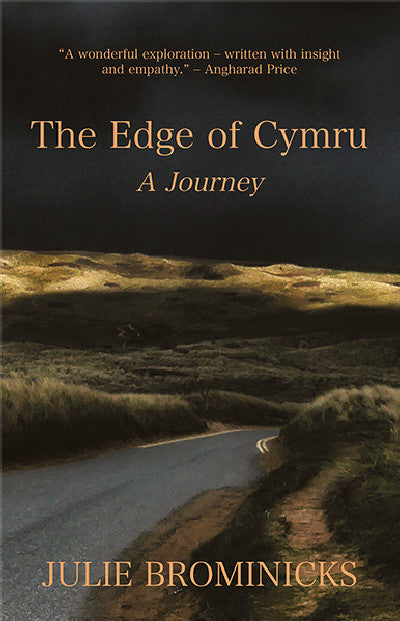
Treuliodd y llenor natur a'r heicwraig Julie Brominicks flwyddyn yn cerdded o amgylch Cymru, gan ddarganfod y gellir cael golwg wahanol ar lefydd cyfarwydd. Mae ei chyfrol newydd yn cyfuno edrych trwy lensys hanes, taith, yr amgylchedd a natur er mwyn cynnig golwg a dealltwriaeth newydd o Gymru a'r byd.
Disgrifiad Saesneg / English Description
Nature-writer and hiker Julie Brominicks takes a year-long walk around the edge of Wales and discovers places she thought she knew can be viewed in many ways. She reflects this in her new book, which combines the lenses of history, travel, the environment and nature to look at Wales, and the world, with fresh eyes and understanding.
Manylion y cynnyrch / Product details
- ISBN 13
- 9781781727782
- Gwales Code
- gwales.com.9781781727782
- Gwerthwr / Vendor
- Cyngor Llyfrau Cymru
- Long Title
- The Edge of Cymru
- Awdur / Author
- Brominicks, Julie
- Current Price ex VAT
- £12.99
- Current Price inc VAT
- £12.99
- Availability Status (EN)
- Available
- Availability Status (CY)
- Ar gael
- Dyddiad cyhoeddi / Publication Date
- 2024-04-30
- Cyhoeddwr / Publisher
- Seren
- Media Type (EN)
- Paperback / softback
- Media Type (CY)
- Clawr meddal
- Pages
- 294 pages
- Size
- 135 × 208 mm; depth 18 mm
- Language Code
- English
- Categori / Category
- CY: Taith, Twristiaeth, Teithlyfrau (yn Saesneg) | EN: Travel, Tourism, Guide Books (in English)
- Is-gategori / Subcategory
- CY: Teithlyfrau - Cymru (yn Saesneg) | EN: Travel Writing - Wales (in English)
- FSC Status
- FSC certified (mixed sources) — C127282
Bywgraffiad yr Awdur / Author Biography
Julie Brominicks was an educator at the Centre for Alternative Technology near Machynlleth. Now a writer, her locational nature features and environmental articles are regularly published in BBC Countryfile Magazine and Clean Slate, and she blogs regularly at https://juliebrominicks.wordpress.com. She lives off grid, in a caravan, in a secluded valley near Machynlleth. She is a longstanding walker, mostly around Europe.
Adolygiad y Cyhoeddwr / Publisher Review
This is an excellent book, written by a thoughtful, wise and very well-read environmentalist. Julie Brominicks makes her way around the fringes of Wales, taking a year to make the circumnavigation. At weekends she is accompanied by her partner, whom she finds time to marry in the midst of her journey. The book is a good introduction to Welsh history, which is presented in digestible morsels. It also avoids the ‘history speak’ that has always put me off the subject, so I’ve learned a lot from this unusual source. Her personal views are refreshingly immediate and idiosyncratic, but she seems to have done an extraordinary amount of good research. She salts her factual theses with some sensible analyses, with the dual threads of socialist egalitarianism and environmental concern weaving a constant weft. In fact, the tone throughout is humane, self-effacing and innovative. At its best the prose paints vivid pictures that place the reader in the centre of the scene. This is an accomplished skill, that gives immediacy to the narrative. There is much poetry in Julie’s ways of expressing herself. Some of the sentences read like a haiku, a rhythmic introduction with a somewhat startling change of direction, or an oblique reference to a half-forgotten preceding idea. ‘The tourist industry / Met the rest of Cymru at the coast / But you could easily miss it.’ ‘Rabbits thumped the ground / Three curlews flew south, so I sent with them / Birthday greetings to my mum.’ Other sentences (unintentionally?) leave one chuckling: ‘I put my tent in a dune slack, and waited for a man with a metal detector to finish digging his hole, before getting in.’ The episodic nature of her journey has been turned into a positive element because of the assuredness of the writing. Journeys home by bus or train become as important as the hiking, and help with the psychological journey that accompanies the walk. There are more opportunities for social interactions, whilst disjunct paragraphs and phrases of overheard conversation form a Daliesque semi-surreal Greek chorus to the travelling narrative. In her introduction, the author, a developing Welsh learner, explains that she has chosen to use only Welsh words for Wales, Welsh (the language) and Welsh people and things, and that only the Welsh names of places within the country will be used. Her partner, Rob, warned her against this strategy, and I agree with him. I think it has detracted from the flow and clarity of the narrative. It’s certainly jarring and odd when the word ‘Cymreig’ (Welsh as in a Welsh person or thing) is used as an adjective, for example ‘Cymreig monks'. In Welsh, as in many languages, the adjective comes after the noun. Having said that, there are probably lots of readers who will find the device adds a certain spice and exoticism to the book, and will enjoy looking up where is meant by place-names like Y Waun (Chirk) or Elái (Ely). I am aware that I have not done justice to this substantial book in a short review. There are many facets that have not been covered here. The author has interesting things to say about the nature of nationalism, and how she feels guilty at times for being English. She is a good naturalist too, as well as a good environmentalist. I enjoin you to read and enjoy it.
Share