Cyngor Llyfrau Cymru
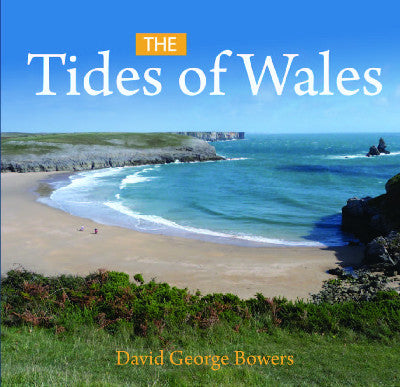
Tides of Wales, The - Compact Wales
Tides of Wales, The - Compact Wales
Couldn't load pickup availability
Disgrifiad Saesneg / English Description
It is unusual to see a book about the tides of a single country. A book about tides in Wales is akin to, for example, one about rainbows in Madagascar. So, what's so special about Welsh tides to make them merit this book?
Dosbarthu
Byddwn yn dosbarthu eitemau sydd mewn stoc o fewn 3 diwrnod gwaith, fel arfer drwy Royal Mail Tracked 48. Ar gyfer archebion o flaen llaw, byddwn yn dosbarthu’r eitem o fewn 3 diwrnod gwaith ar ôl ei derbyn gan ein cyflenwr.
Dispatch
In-stock items will be dispatched within 3 business days, usually by Royal Mail Tracked 48. For pre-orders, we’ll dispatch within 3 business days of receiving the item from our supplier.
Manylion y cynnyrch / Product details
- ISBN 13
- 9781845243142
- Gwales Code
- gwales.com.9781845243142
- Gwerthwr / Vendor
- Cyngor Llyfrau Cymru
- Long Title
- Tides of Wales, The - Compact Wales
- Awdur / Author
- Bowers, David George
- Current Price ex VAT
- £8.50
- Current Price inc VAT
- £8.50
- Availability Status (EN)
- Available
- Availability Status (CY)
- Ar gael
- Dyddiad cyhoeddi / Publication Date
- 2021-03-30
- Cyhoeddwr / Publisher
- Llygad Gwalch Cyf
- Media Type (EN)
- Paperback / softback
- Media Type (CY)
- Clawr meddal
- Pages
- 136 pages
- Size
- 155 × 150 mm; depth 12 mm
- Language Code
- English
- Categori / Category
- CY: Natur, Daearyddiaeth, Daeareg (yn Saesneg) | EN: Nature Studies, Geography, Geology (in English)
- FSC Status
- FSC certified (mixed sources) — C019670
Cynnwys / Table of Contents
Along its relatively short coastline, Wales manages to pack in some of the greatest tidal phenomena on our planet. On a journey around the Welsh coast you can see the largest rise and fall of the tide in Europe (and in the world, outside Canada). It is a fact that many of the subtleties of tidal mixing were first discovered in Welsh coastal and offshore waters and then found to be important wherever there are tides. Historically, Welsh people have always been exceptionally good at using the tide. They made traps to catch fish and tide mills to grind wheat (the tide provided the country with its loaves and its fishes). As we move to an uncertain energy future, the great Welsh tides can be harnessed as a clean and reliable source of energy.
Adolygiad y Cyhoeddwr / Publisher Review
If you think you know all about tides, think again! If you want to know about tides, buy this book. Especially if you live in Wales. Welsh tides deserve a book of their own, says the author. He goes on to do ample justice to this assertion, showing right from the start the important impact of tides around Wales, emphasised by the fact that we have the highest tides in the world excluding parts of Canada. I have always found the tide an exciting phenomenon, fascinating to watch, but impenetrably complicated in detail. In this, I think I'm correct, but this book manages to achieve an almost magical feat by revealing a large amount of the complexity and wonder of the tides around Wales at a level that can be appreciated (if not totally understood) by non-experts. It does demand a pretty high level of concentration to get full value, but the prose is exceptionally clear and readable, whilst a generous sprinkling of personal anecdotes and interesting background allows the intellect some space for relaxation. My wife leapt upon the book as soon as it arrived in the house. Whilst she was devouring it, I was being asked, ‘did you know that...?’, at unusual frequency. David George Bowers demonstrates an enviable mastery of his subject and passes on his knowledge in an engaging and enjoyable manner. He begins with the more obvious nature of tides, with things that most of us will have noticed on beaches and estuaries, or from the cliffs; and moves on to some fascinating detail of the routes taken by bodies of water moving tidally around the Welsh coast. We are used to the idea of the tidal range, but maybe you didn’t know how this varies, with the lowest range at Aberdyfi, and the highest up the Severn Estuary around Newport and Chepstow. He explains in detail why this is the case. It’s probably not what you thought! The text is amply supplemented by photos, graphs and diagrams that help enormously to explain the often-complicated phenomena that are created by the movement of huge quantities of water impinging on our coast. His approach is to present the results of scientific investigation in digestible portions and at a pace that allows a build-up of comprehension. I’m sure that many oceanographers and marine scientists will appreciate this book, in the same way that, as a student of ecology and soils, I benefit from well-written ‘popular science’ books in those subject areas. This is not to say that the book is aimed at such people. It will be read with great interest by anyone with an enquiring mind. There is plenty of spice to add flavour and balance to the banquet. Cultural and historic references include swimming, sea kayaking and watching tidal bores, with a wealth of history. I was personally interested by the account of fish traps around the Welsh coast, which go back to the early mediaeval period and probably a lot further. The author transitions seamlessly from history to the future, discussing the predicted effects of climate change, and the ways in which the tides can be harnessed by mankind without causing undue environmental damage. I am grateful to the author and publishers for making all this excellent information available and will look anew at the wonders of our coastline.
Share