Cyngor Llyfrau Cymru
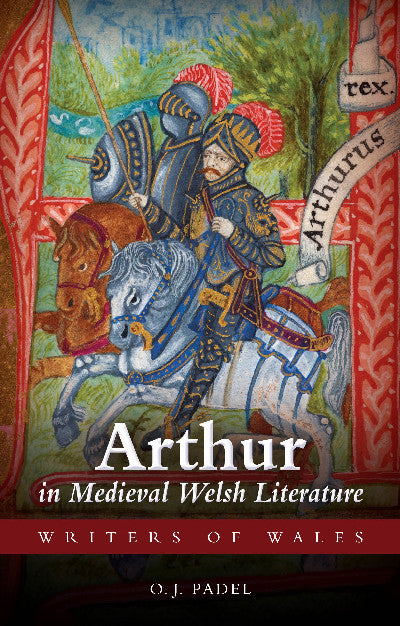
Writers of Wales: Arthur in Medieval Welsh Literature
Writers of Wales: Arthur in Medieval Welsh Literature
Couldn't load pickup availability
Disgrifiad Cymraeg / Welsh Description
Arolwg diddorol iawn o'r cyfeiriadau niferus at Arthur a geir mewn llenyddiaeth Gymraeg ganoloesol yn pwysleisio'r amrywiol arddulliau llenyddol a ddefnyddir a'r amrywiol weddau a roddir i'r cymeriad. Argraffiad newydd.
Disgrifiad Saesneg / English Description
A fascinating survey of the numerous references to Arthur found in medieval Welsh literature emphasising the diverse literary genres used and the multifaceted portrayal of the character. New edition.
Manylion y cynnyrch / Product details
- ISBN 13
- 9780708326251
- Gwales Code
- gwales.com.9780708326251
- Gwerthwr / Vendor
- Cyngor Llyfrau Cymru
- Long Title
- Writers of Wales: Arthur in Medieval Welsh Literature
- Awdur / Author
- Padel, O J
- Current Price ex VAT
- £16.99
- Current Price inc VAT
- £16.99
- Availability Status (EN)
- Non-Stock Item - Ordered on request
- Availability Status (CY)
- Archebir yn ôl y galw
- Dyddiad cyhoeddi / Publication Date
- 2013-05-06
- Cyhoeddwr / Publisher
- Gwasg Prifysgol Cymru / University of Wales Press
- Media Type (EN)
- Paperback / softback
- Media Type (CY)
- Clawr meddal
- Pages
- 120 pages
- Size
- 138 × 216 mm
- Language Code
- English
- Categori / Category
- CY: Astudiaethau a Thestunau Llenyddol (yn Saesneg) | EN: Literary Studies and Texts (in English)
- Is-gategori / Subcategory
- CY: Astudiaethau Llenyddol (yn Saesneg) | EN: Literary Studies (in English)
Cynnwys / Table of Contents
Preface to the new edition Acknowledgements 1. Introduction 2. The Earliest Texts 3. Arthur’s World: Culhwch and Pa Ŵr yw’r Porthor? 4. Other Texts of the Central Middle Ages 5. Three Dialogue Poems 6. The Matter of Britain 7. The Continuing Tradition 8. Some Arthurian Characters 9. Was there an Arthur of the Welsh? Select Bibliography
Bywgraffiad yr Awdur / Author Biography
O. J. Padel was formerly Reader in Cornish and Celtic in the University of Cambridge.
Adolygiad y Cyhoeddwr / Publisher Review
This is a new edition of the book first published in 2000 (with an additional bibliography) and presents a detailed and lively analysis of the many versions of Arthur throughout the medieval period. As the title indicates, the focus is on Welsh literature, but the nature of the subject means that accounts in French and Latin are also brought into the picture. The book carefully traces the changes in the way Arthur was portrayed in texts from the ninth century (almost certainly reflecting earlier stories) to the fourteenth. He began as a warrior, out for excitement and, in the author's words, ‘well-intentioned but not very bright’; he then appeared in local folklore and as a capricious character in lives of the saints. The major change in his image came in Geoffrey of Monmouth's History of the Kings of Britain , written in the 1130s primarily for a Norman audience but also very popular in Wales, in which he became the most glorious of the kings of Britain and a magnificent international warlord, not only defeating the Saxons but cutting a large swathe through western and northern Europe until he was brought back to Britain by treachery and fatally wounded in a crucial battle. The fact that British resistance to the Saxons subsequently crumbled only emphasised the extent of his power and greatness. He later appeared as a character in Welsh Romances influenced by the codes of French chivalry, shown as a regal figure of dignified authority with a sense of responsibility completely lacking from the comic and often capricious adventurer of the earlier stories. Padel skilfully marshals a wide range of sources to trace the ways in which the figure of Arthur changed across time to respond to social and political influences and developments in Welsh society during this period, and provides a clear guide to the presentation of a character who modulates from a warlord at the end of the so-called 'Dark Ages' to the flower of medieval chivalry. His conclusion – that the figure of Arthur has to be considered contextually, in relation to the nature of each text in which he appears – arises from a clear, accessible and enjoyable consideration of the ways in which one of the most pervasive figures in medieval Welsh literature was presented across five centuries.
Share